
Kaheawa Wind Farm Faces Tight Timeline To Mitigate Nēnē Takes Before Holdover Ends
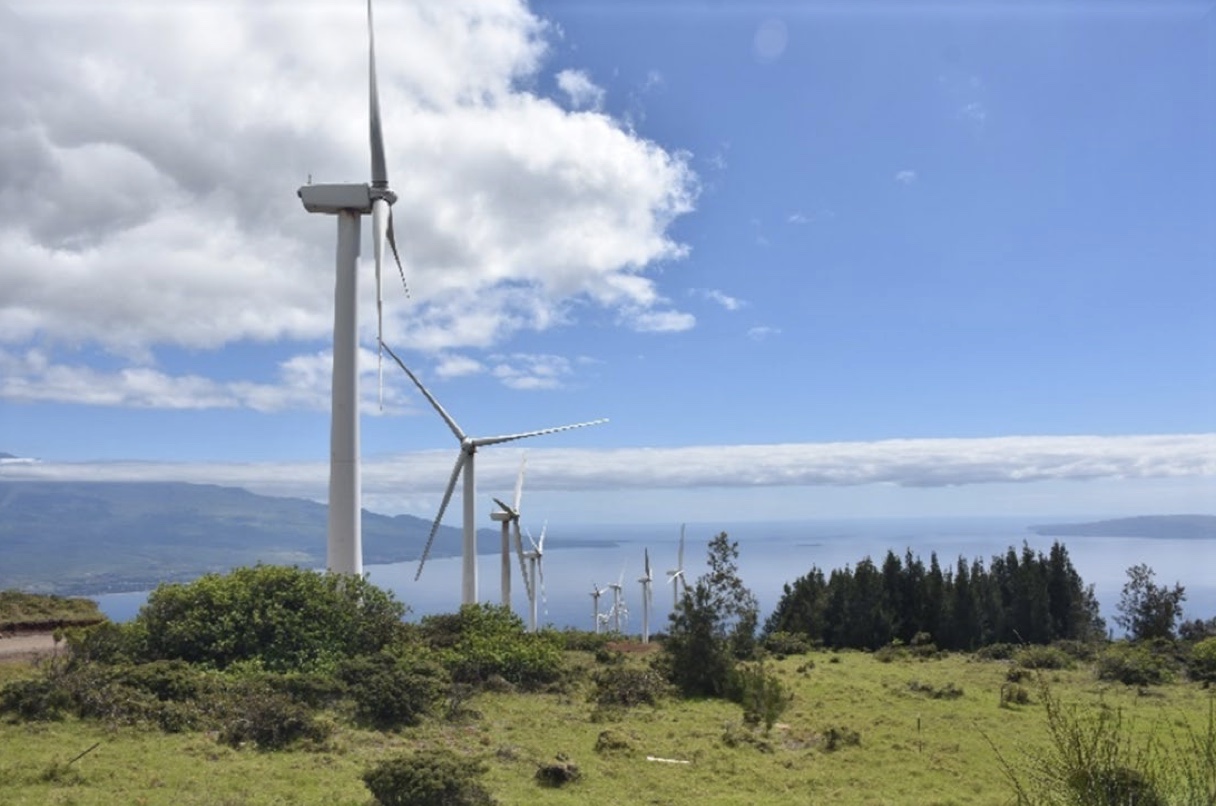
Kaheawa Wind Power I, Maui’s first wind farm, is facing the possibility of being shut down. That’s the consequence if it fails to comply soon with mitigation requirements for its excessive take of nēnē, the Hawaiian goose that is federally listed as threatened and listed by the state as endangered.
With its 20-year lease for state Conservation District land set to expire on January 31, 2025, the company came close to losing its authority to continue operating the 20 wind turbines that make up the 30-megawatt project. But at its December 13 meeting last year, the state Board of Land and Natural Resources granted the company’s request for a one-year holdover permit.
That holdover expires on January 31, 2026. In the meantime, the company must complete an environmental impact statement for a new lease and obtain all required approvals for a new habitat conservation plan (HCP) and incidental take license (ITL).
Whether it can achieve that remains to be seen. A draft EIS was released on August 8. And based on discussions at meetings last month of the state Endangered Species Recovery Committee and the Land Board, the draft HCP is far from acceptable.
Under a new ITL, the company seeks to take 69 nēnē, 38 ‘ōʻpeʻapeʻa (Hawaiian hoary bat), 28 ‘ua ‘u (Hawaiian petrel), 10 ʻaʻo (Newell’s shearwater), and 10 ʻakēʻakē (band-rumped storm-petrel), as well as “impacts of up to 23.2 acres of suitable habitat for the Assimulans yellow-faced bee,” according to a DOFAW report.
Even if a final EIS and HCP are accepted and approved in time, there is still the matter of non-compliance with the old HCP.
At the board’s December 13 meeting, the Department of Land and Natural Resources’ Division of Forestry and Wildlife expressed concerns about the facility’s impacts on protected species, especially nēnē.
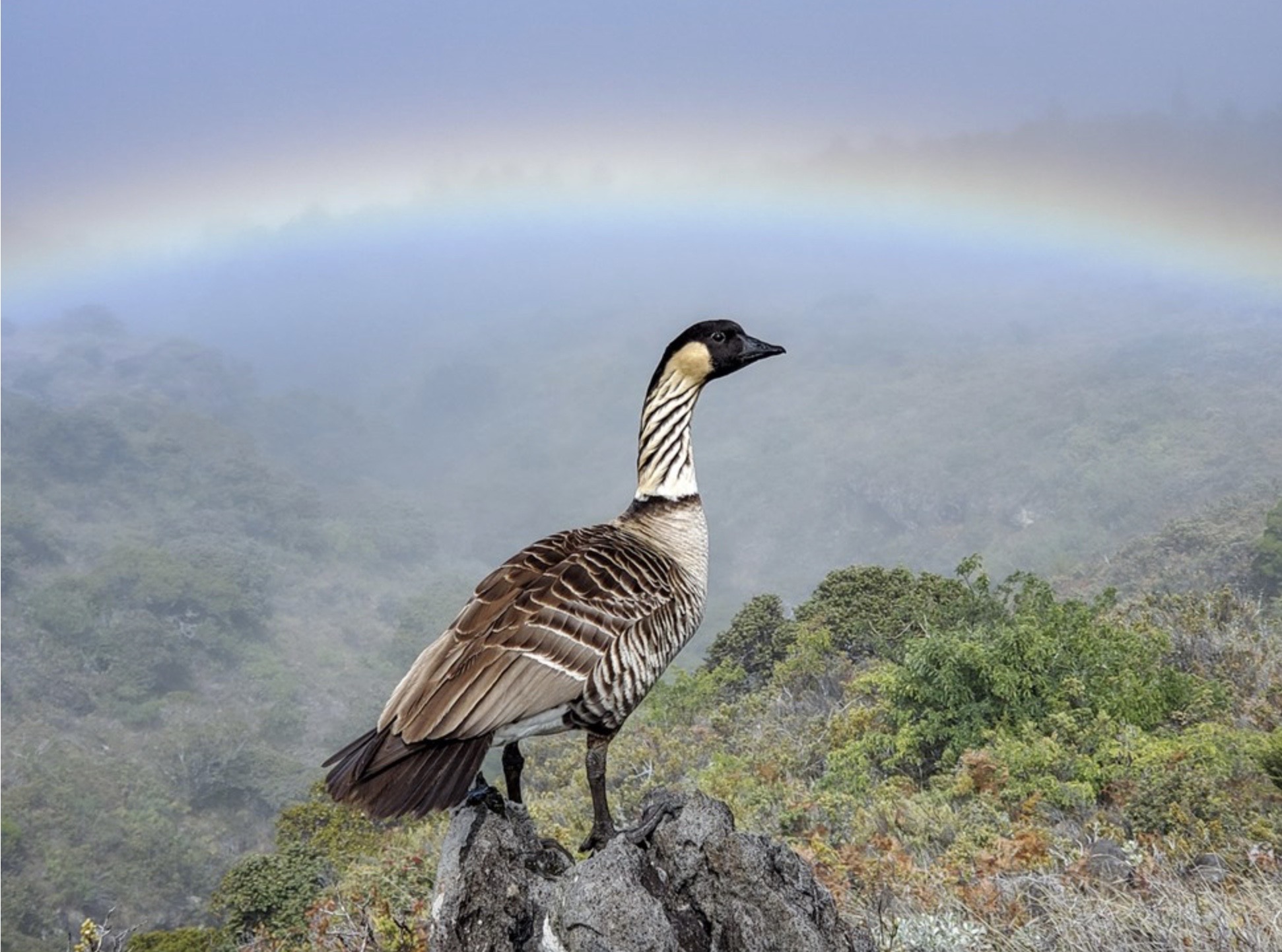
The estimated cumulative nēnē take at the time of the meeting was 55. But as of April 5, 2024, mitigation by KWP had only earned it 22.6 credits, allowing the take of no more than 23 birds.
“Since April 5, 2024, KWP has diligently worked with DOFAW to raise their mitigation credits through creative solutions and the funding of propagation work. As of October 2024, KWP has approximately 45 credits and needs to complete approximately 10 more credits to mitigate their current cumulative take of 55. Nevertheless, per the HCP, KWP needs a total of 60 mitigation credits prior to the expiration of their HCP and ITL in January 2026 in addition to an additional 5 credits to mitigate lost productivity due to delayed mitigation,” DOFAW’s report to the Land Board stated.
In written testimony, KWP assured the Land Board, “Any impacts to threatened and endangered species during the holdover term … have either already been mitigated for or will be mitigated for by ongoing programs.”
By the end of fiscal year 2025 (June 30), cumulative estimated nēnē take had increased to 56, according to a DOFAW report last month to the Endangered Species Recovery Committee.
The report continues that as of December 2024, DOFAW and the U.S. Fish and Wildlife Service had allocated KWP I 45.68 nēnē mitigation offsets “from management that increased adult survival and fledgling production at Haleakalā and Piʻiholo Ranch Nēnē Pens.” It was also anticipated that additional offsets from the FY 2025 breeding season would bring the company’s total mitigation offset to “50.3 adult-equivalent nēnē,” the report states.
Despite the improvement, an August 22 DOFAW submittal to the Land Board states that it is “biologically infeasible” for the wind farm to fully offset its nēnē take before the holdover permit expires.
Even so, at the Land Board meeting that day, members voted unanimously to approve a recommendation by DOFAW to hold a public hearing on a draft HCP for a proposed new 23-year incidental take license.
Before voting, Land Board members discussed at length what would happen if the wind farm cannot meet its mitigation requirements under the old HCP.
“Let’s say they don’t make it. They don’t meet the deadline. What happens then?” Maui board member Doreen Canto asked DOFAW administrator David Smith.
“We just try to negotiate down to get some kind of mutually acceptable thing that meets the law. So we try to work with them rather than just shutting people down. … They need to be showing good faith,” he replied.
To this, Hawaiʻi island Land Board member Riley Smith said, “I’m assuming that based on this conversation that there are no consequences for non-compliance.”
“I wouldn’t say there are no consequences. … It comes down to prosecutorial discretion. … We could sue them. We could fine them. We could shut them down,” DOFAW’s Smith said.
Land Board chair and DLNR director Dawn Chang, a former deputy attorney general, suggested that the state’s options were more limited. Non-compliance with an existing HCP “is a basis upon which we cannot consider a new HCP, which would be traumatic because that would mean they would shut down,” she said.
“But you would definitely have their attention. They would understand the consequences of non-compliance,” board member Smith said.
“And that’s what the attorney general’s office did in this case,” DOFAW’s Smith replied. “They came in. There was very little movement on the applicant’s part. The attorney general’s office came in and got them moving based on reading them various options that we had.”
While he wanted to avoid having to shut down any wind farm for non-compliance, Smith said that KWP I dug its own hole.
“I don’t have a lot of sympathy for them. … If they fail … it’s on them,” he said, adding, “We’re bending over backwards to try to work with them.”
In testifying before the board, Earthjustice attorney David Henkin argued that the wind farm was already in breach of its current HCP.
Under Hawaii Revised Statutes 195D-21(d)1, he said, “this board is supposed to suspend their existing HCP unless they have cured the breach in a timely manner, which doesn’t sound like they have. And in any event, they need to cure the breach and be in compliance by the end of the permit term, which we know is biologically infeasible.”
(HRS 195D-21(d) states, “Notwithstanding any other law to the contrary, the board shall suspend or revoke the approval of any habitat conservation plan approved under this section if the board determines that: (1) Any parties to the plan, or their successors, have breached their obligations under the plan or under any agreement implementing the plan and have failed to cure the breach in a timely manner, and the effect of the breach is to diminish the likelihood that the plan will achieve its goals within the time frames or in the manner set forth in the plan.”)
With regard to the draft HCP, Henkin noted that the ESRC was meeting that very same day to discuss and make recommendations on it. Earthjustice attorney Harley Broyles was attending the ESRC meeting. In written testimony, she noted, among other things, that the draft HCP proposed implementing low wind speed curtailment — where turbines do not spin in low wind — when winds were less than 5.5 meters per second. This, despite ESRC guidance that cut-in speeds be no less than 6.5 m/s to minimize bat take.
“Kaheawa I’s draft HCP fails to comply with the mandate to minimize take to the maximum extent practicable. The draft HCP proposes implementing LWSC cut-in speeds of 5.5 m/s annually, from February 15 through December 15, as the facility has done since 2014. It is well established, however, that a 5.5 m/s cut-in speed results in significant harm to ‘ōpe‘ape‘a at Kaheawa I, with five documented ‘ōpe‘ape‘a fatalities at the facility since it implemented LWSC with a cut-in speed of 5.5 m/s. … Additional fatalities and other take undoubtedly have occurred but have not been documented,” Broyles wrote.
Indeed, at the ESRC meeting that day, one of its recommendations for bat take minimization was to “explore smart curtailment (activity by time of night) and higher wind speed cut off.”
The committee was scheduled to visit the facility this month.
In his written testimony to the Land Board, Henkin suggested, “Before the board commits to a public hearing, with the associated demands on the board’s and the public’s limited resources, it should wait to hear whether the ESRC recommends approval of this draft HCP.”
Testifying before the board, he added, “Much as we’d like to have them have a [incidental take] permit, we want to see a legal permit and this draft is going to change a lot, so going forward with a public hearing at this point just seems premature.”
“Whether this applicant should have permission to harm our native species given their lousy track record … will ultimately be up to this board to decide,” he said.
In response to Henkin’s testimony, DOFAW’s Smith said that he couldn’t see the benefit of cancelling the HCP at this point. “The board can do it if they want. We would rather try to work with them,” he said.
“It’s been argued that they aren’t going to be able to make it [nēnē take credits] up by the end of their permit term and I have been advised that puts them into breach. But I also think that you could argue it’s not a breach until their permit term is up. …I know there’s been very smart people who have argued against me on that. That is where I’m coming from. I think they’re not actually in violation util the end of the permit,” Smith continued.
Land Board member Riley Smith agreed.
“You shouldn’t cite someone for non-compliance until the time runs out. If [Kaheawa] makes a good a faith effort to get there but doesn’t get there, but then there’s some assurance that [it] will be able to comply, whether through a bond or some other obligation that has consequences to it, I think there’s a way the state’s interest can be protected and puts the applicant on a path to being in compliance.
“All our meetings are public record. I’m surprised Kaheawa isn’t here, but I’m sure they’re going to watch this, and they’re going to listen to all the comments that we’re making,” he said.
Ian Hirokawa of the DLNR’s Land Division, which is processing Kaheawa’s request for a long-term lease, said his agency is working to get a new lease to the board for approval before the holdover expires.
“We’re potentially looking at how we can address [the HCP] in the lease knowing there is sort of an uncertainty,” he said.
Chang repeated that if the wind farm is not in compliance with the HCP, “arguably they’re in breach, and, therefore, we may not be able to issue them a lease.”
To this, Hirokawa said the department could look at including a bond requirement in the lease.
“Or we could just have them shut it off,” Chang said. “I think what we’ve been trying to do is insure uninterrupted service so that they don’t shut off, but the burden has been back on Kaheawa. They’ve known this as of a year ago when their lease expired and the board took an extraordinary action to issue a holdover to give them that additional time for an EIS and an HCP. It’s not that they’re not aware. The department has done everything that it can.”
Afsheen Siddiqi, DLNR seabird and waterbird recovery coordinator, noted that HCPs require funding assurances, usually a letter of credit, but “it can be a bond.”
“That is for the purpose if they don’t meet the mitigation criteria, we can actually take money from the bond, so there is a mechanism. We have never actually taken that. And I don’t know the details of this specific HCP, what those numbers look like,” she said.
“If they’re not going to make the mitigation, then they should be talking about the bond,” Chang said, adding that those kinds of conversations with Kaheawa should start no later than October or November “to make sure that they’re in compliance so Land Division can even consider a new lease.”
Public Hearing Approved for KIUC Habitat Conservation Plan
The Kauaʻi Island Utility Cooperative has been harming or killing protected species with its power lines and street lights for decades without an approved habitat conservation plan and incidental take license from the state. But that may soon change.
At the Land Board’s August 22 meeting, the DLNR’s Division of Forestry and Wildlife requested that the board approve a public hearing on a second draft HCP that KIUC had prepared in its effort to obtain both a federal incidental take permit and a state ITL.
DOFAW administrator David Smith explained, “Currently there’s no permit. Not a federal or a state permit. That’s why we’re trying to rush. We really want to get a permit because, technically, they’re not even liable for their damages at this point unless we take them to court. We just have prosecutorial discretion. We just haven’t done that because we’re working with them.”
He added that although the HCP has yet to be approved, mitigation work is already being done. “They have really really good people working on it. … Everybody’s decided to hold fire against going against them because one of the alternatives would be [to] shut down all the power lines on Kauaʻi, or make them take it down. I don’t know what the alternative would be.”
Earthjustice attorney David Henkin testified, “We have also been exercising our prosecutorial discretion because citizens can sue them under the Endangered Species Act.”
He said that while he was also eager for KIUC to obtain a take permit, he thought that the state’s Endangered Species Recovery Committee should at least have a chance to review and make recommendations on the second draft before it is presented at a public hearing.
“The ESRC has never met to evaluate the scientific adequacy of the second draft KIUC HCP. The ESRC reviewed an earlier draft of this HCP over two years ago (on February 28 and March 1, 2023) and raised serious questions at that time regarding whether its conclusions about take minimization and mitigation were scientifically justified. Since that time, KIUC has lost access to the Upper Limahuli Preserve at the National Tropical Botanical Garden, which was a key component of KIUC’s mitigation strategy, calling into question whether the current draft HCP satisfies legal requirements. The ESRC should review the adequacy of KIUC’s revised draft HCP at a formal meeting (at which the public, including scientific and other technical experts, can provide input) and make its recommendations before the board makes any decision about whether to proceed with a public hearing,” he stated in written testimony.
“You should know before you put this out for public hearing whether the science is good,” he said.
“One of the cornerstones of mitigation [in the draft HCP] is the preservation of the upper Limahuli Preserve on National Tropical Botanical Garden property. Some issues have arisen with the contractor that KIUC brought in that started introducing [ants] and weeds. … They currently do not have access to that property,” he said.
Former NTBG CEO and a current member of its board of trustees Chipper Wichman also expressed concern about the draft plan.
“We’ve been in discussion with KIUC since April. … I’m not sure we’re any closer than we were four months ago. Our property has more Newell’s shearwater nests than all the other sites combined. It’s a critical part of the HCP and I would hope that the public would be able to know whether that property is in or out when they comment on the draft. We want to be part of it, but we need assurances we’ll be treated fairly and the contractor will respect our biosecurity policies,” he said.
According to KIUC’s Dawn Huff, the public hearing, if approved, would likely be held on September 16.
Smith also noted that one reason his division is pushing to hold the public hearing without having to wait for the ESRC to weigh in is to keep up with the federal ITP process.
Afsheen Siddiqi, DLNR seabird and waterbird recovery coordinator, added that the division also doesn’t want to go to a public hearing saying the ESRC has already decided on the plan.
Should the ESRC ultimately reject the plan, the Land Board would not be able to approve it. It would then need approval from two thirds of the state Legislature. Or, KIUC could present a third draft to the ESRC and the board.
Henkin informed the board that even if the federal government approved an ITP and the HCP, the permit would not be valid until the state issued its ITL.
(This article has been amended to remove part of a statement from David Henkin that little fire ants had been introduced into Upper Limahuli. Little fire ants (Wasmannia auropunctata) “have not been detected in any part of Limahuli Valley, or in the contractor’s fence construction materials. However, numerous biting ants were found in the material storage area and a NTBG staff inspecting the site was severely bitten while taking samples of the ants, which prompted the biosecurity concern,” according to Uma Nagendra, Conservation Operations Manager for Limahuli Garden and Preserve, National Tropical Botanical Garden.)
Land Board Gets Two New Members
The Land Board has two new members replacing former members Vernon Char and Aimee Barnes.
Denise Iseri-Matsubara is the new member for Oʻahu. Calvin Young is the new at-large member.
Iseri-Matsubara is the executive director of Catholic Charities Housing Development Corporation, which, according to a press release from the governor’s office, is “focused on developing and managing affordable housing for seniors and disadvantaged communities. She previously led the Mayor’s Office of Housing for Honolulu and served as executive director of the Hawai‘i Housing Finance and Development Corporation, where she also sat as a board member.”
Young is a partner at the lawfirm Goodsill Anderson Quinn & Stifel and a past president of the Hawai‘i State Bar Association.
Both are graduates of Kamehameha Schools.
— Teresa Dawson