
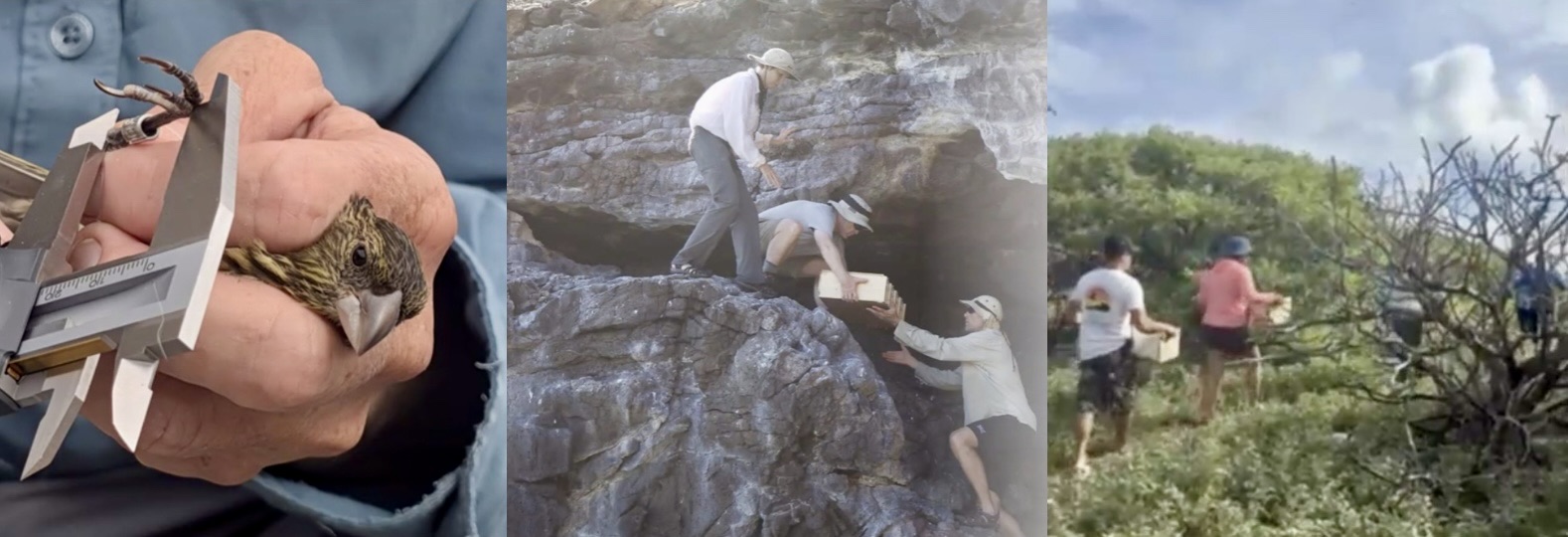
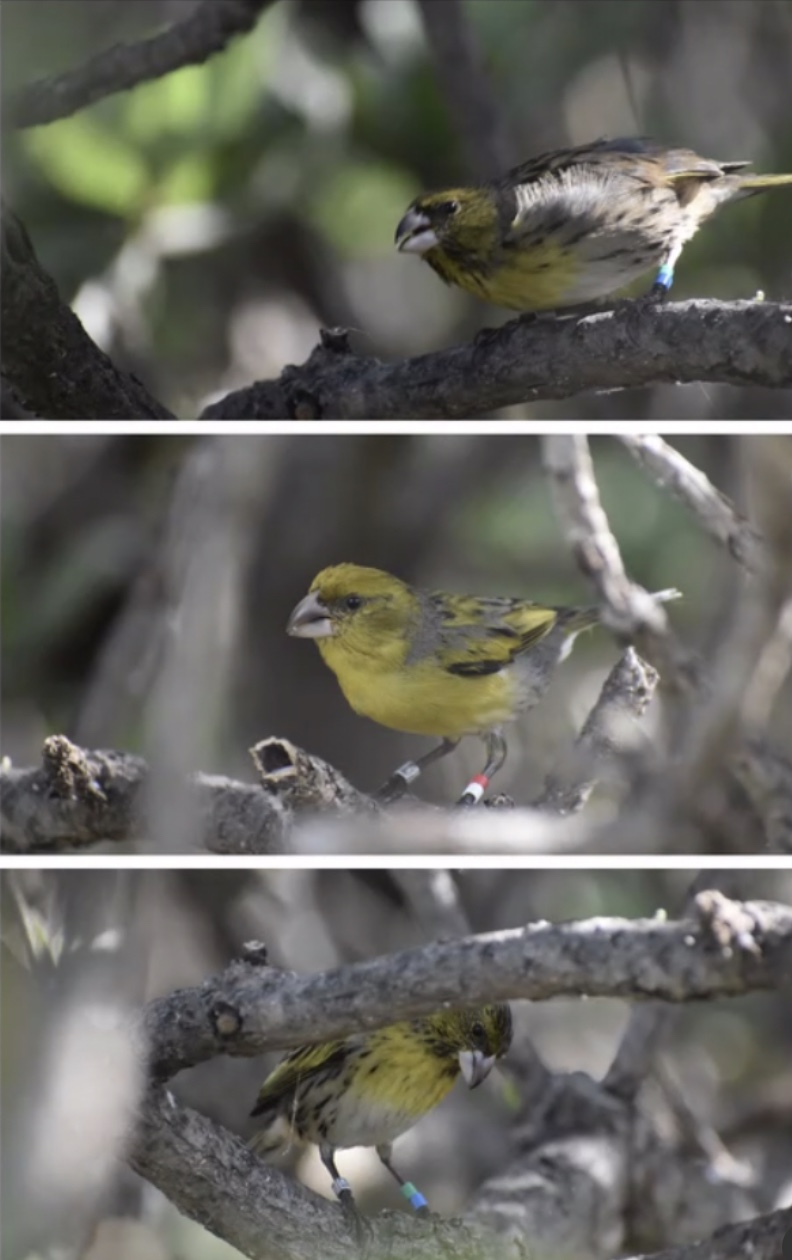
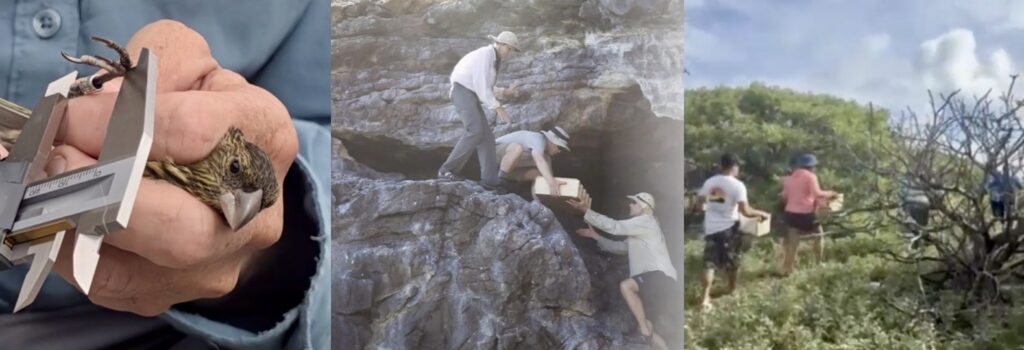
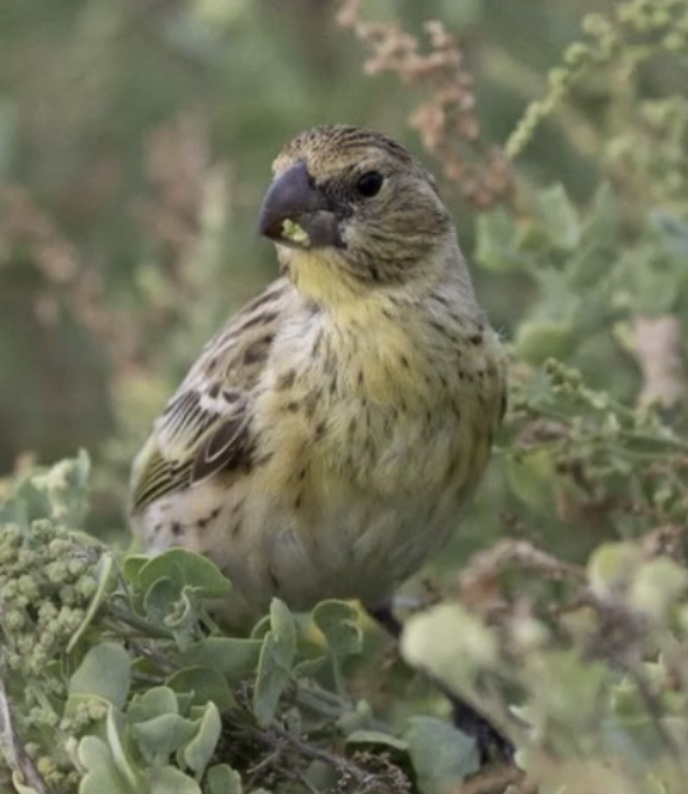
A palihoa being examined on Nihoa (left); the translocation team transporting boxes filled with the birds to the shore (center) and then taking them to the release site on Kapou (right). CREDIT: PRESENTATION BY SHELDON PLENTOVICH, RACHEL ROUNDS, AND HOLLY FREIFELD. CENTER PHOTO BY R. HAGERTY
In the race against the devastating effects of climate change, the two endangered finch species in the Northwestern Hawaiian Islands are making some big strides, thanks to a resource management team committed to their survival.
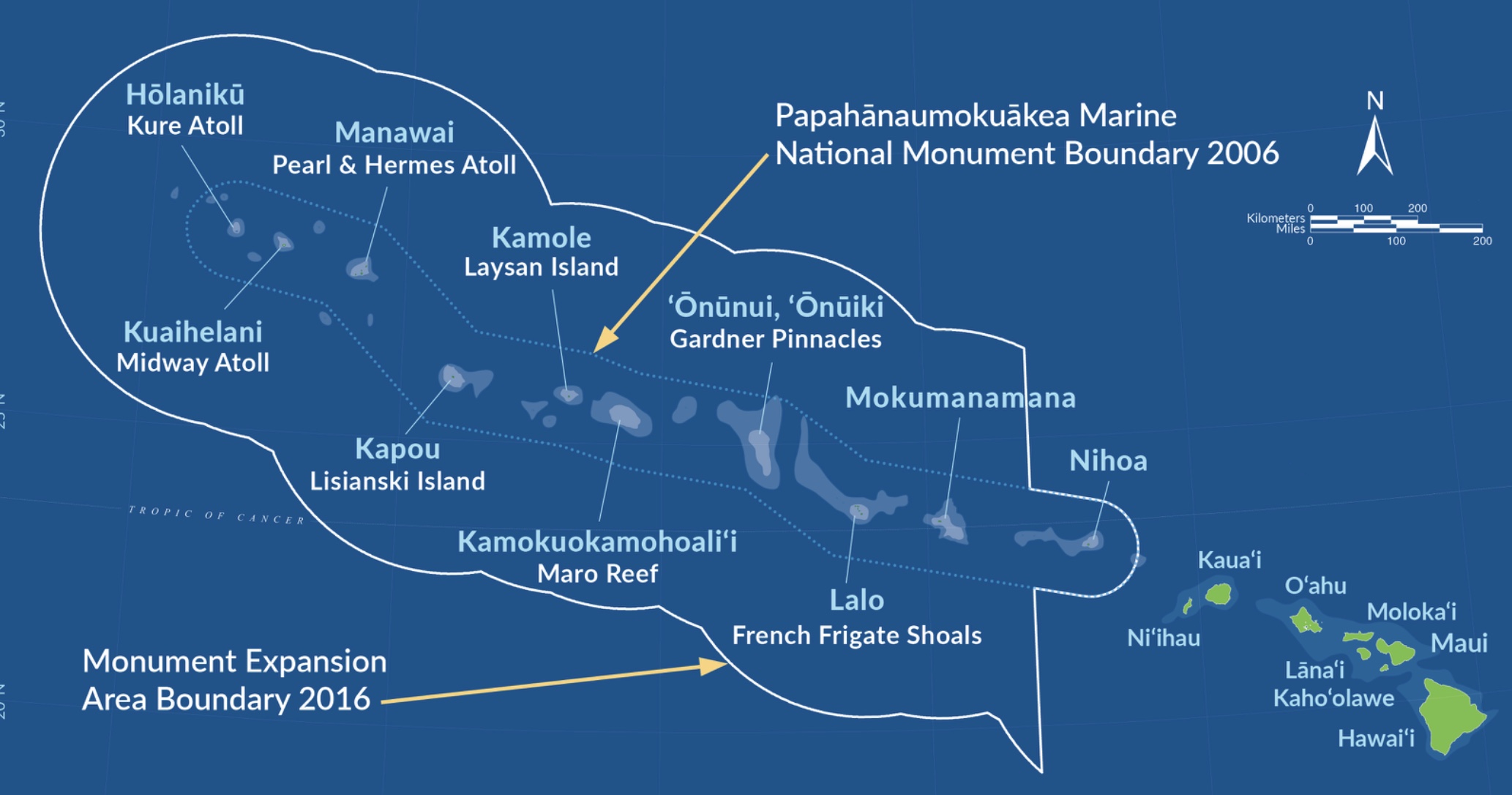
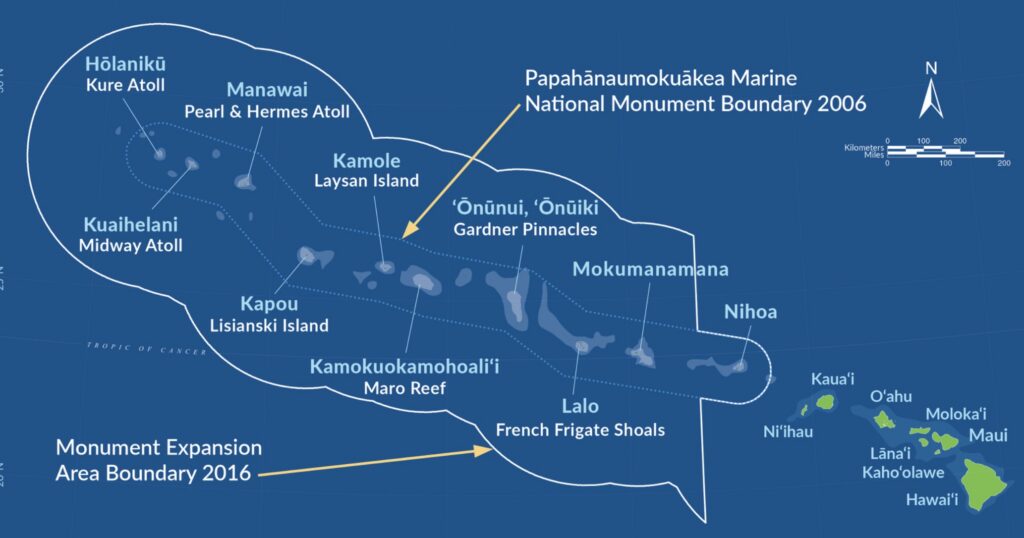
Last month, U.S. Fish and Wildlife Service U.S. Fish and Wildlife Service Pacific Islands Coastal Program manager Sheldon Plentovich reported that palihoa, or Nihoa finch, were heard singing and were seen exhibiting nesting behavior on Kapou (also known as Lisianski island) after surviving Hurricane Lala, which passed through the area less than a week after 49 of the small birds were translocated from Nihoa.
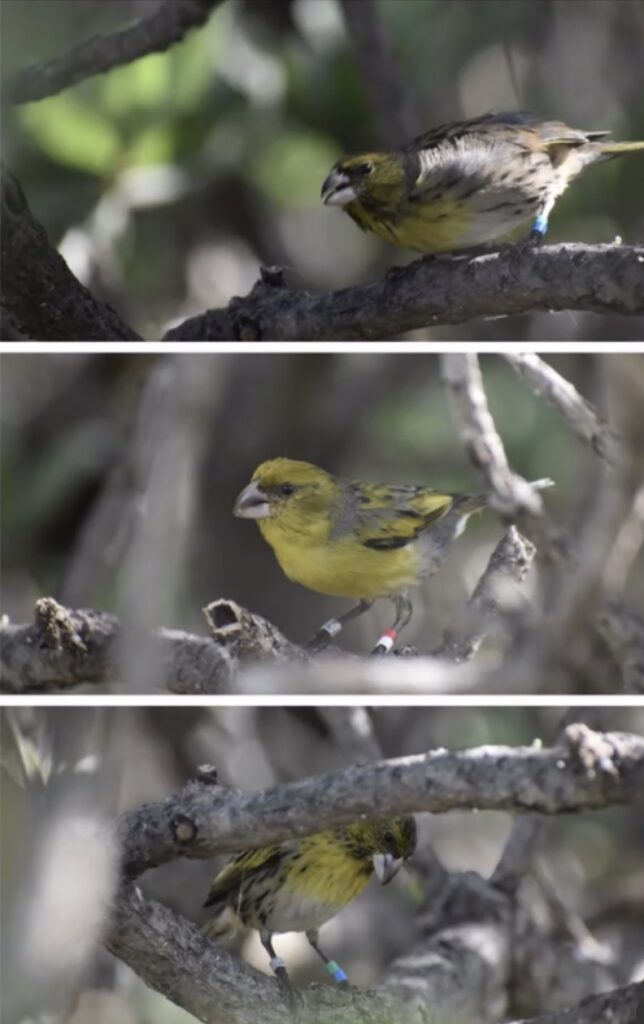
In July 2025, teams translocated 100 ʻekupuʻu (Laysan finch) from Manawai (Pearl and Hermes atoll) to Eastern Island near Kuaihelani (Midway atoll).
According to a 2023 summary by the U.S. Geological Survey, “The ‘ekupu‘u and palihoa are the only Hawaiian honeycreepers that occur today in the Northwestern Hawaiian Islands. Similar to other Hawaiian species that occur in small, isolated populations, both finches face numerous threats that pose a high risk of extinction. Examples of these threats include the potential introduction of nonnative predators and pathogens, habitat alteration by nonnative plants or wildfire, and increasingly severe storms and sea level rise related to climate change.
“Creating additional populations of ʻekupuʻu and palihoa on other Northwestern Hawaiian Islands has been recommended for decades to reduce extinction, with a long-term goal of reestablishing populations for both finch species on high islands within the Main Hawaiian Islands. In 1967, an ‘ekupu‘u population on Manawai was established to reduce extinction risk for the species. However, due to the threats of sea level rise and storm surges, Manawai can no longer fulfill that purpose, and now, the already small and declining population faces extirpation due to the high risk of island inundation and a consequential lack of food resources. In response, the U.S. Fish and Wildlife Service has determined that translocating the Manawai birds to the Eastern Island at Midway Atoll would help preserve the species and provide a more suitable habitat for these birds.”
Plentovich said that the ʻekupuʻu taken from the small, low-lying, invasive plant-dominated Manawai atoll last year did not look great. Their tails were ratty. They didn’t have enough fat. “We felt we were releasing them to Utopia,” she said. And they seem to have thrived since their move to Eastern Island. “Birds were already breeding after eight days,” she said.
Assuming they are able to get funding secured, Plentovich and her team will translocate ʻekupuʻu from Kamole (Laysan) to Hōlanikū (Kure), she added.
The translocations are necessary to establish multiple populations of the birds so that they are less vulnerable, but they are far from easy and require an army of experts, agencies, and supporters.
In addition to the FWS, whose staff led the translocation efforts, the National Oceanic and Atmospheric Administration provided the vessel to ferry the team — including USGS bird expert Thierry Work — and the palihoa between the islands this past August. Other partners that made these projects possible were former University of Hawaiʻi at Mānoa Zoology Department chair Sheila Conant, whom Plentovich called “the brains behind this operation,” the Friends of Hawaiian Islands National Wildlife Refuge, the Hawaiʻi Wildlife Fund, the Audubon Society, the state Division of Forestry and Wildlife, the Papahānaumokuākea Marine National Monument, the Midway Wildlife Refuge, and Pacific Rim Conservation, which Plentovich said provided staff to make sure the birds survived.
Even with an expert team, the work of capturing, selecting, transporting and releasing the birds can be painstaking, arduous and unpredictable.
In the case of the palihoa translocation, the team collected birds from Nihoa, a “high, crazy island,” and took 50 of the healthiest ones to a low-lying island with a completely different habitat, dominated by naupaka and bunch grass. One of the birds did not survive the trip.
On Nihoa, the palihoa drink from freshwater seeps. On Kapou, there is no permanent source of fresh water, which Plentovich said was a concern. They also wondered how the birds would adapt their nesting habits. On Nihoa, they generally nest in rock crevices. But because some nests were seen in bunch grass, the team felt the birds’ behavior was plastic enough that “they’ll be able to figure it out,” Plentovich said. Even so, the team did put out nest boxes on Kapou, just in case they really wanted to nest in cavities.
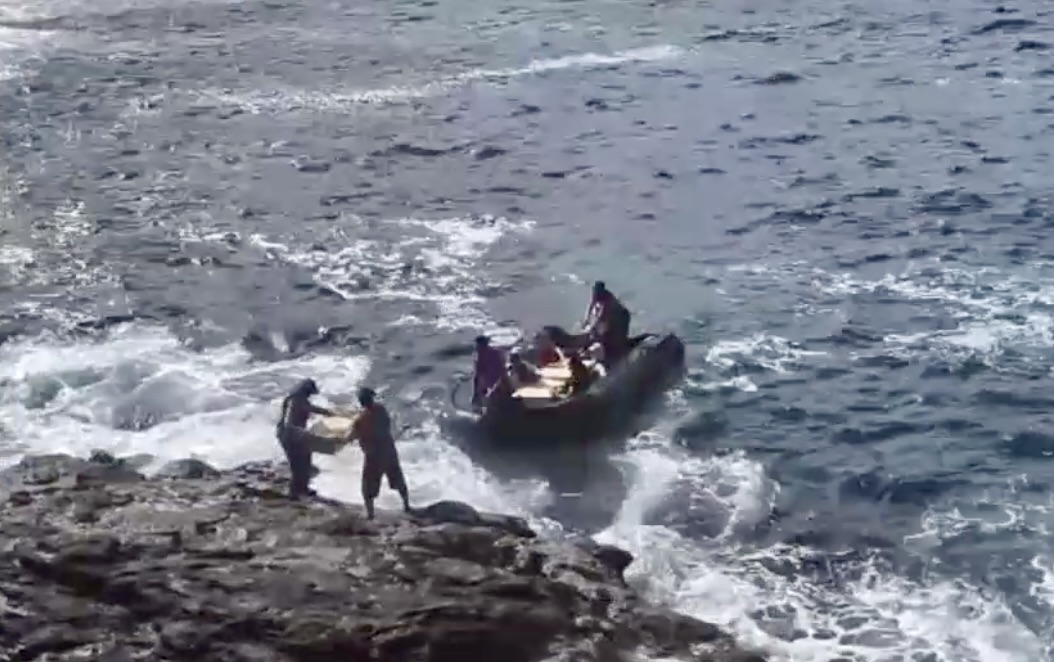
Just getting the selected birds to a Zodiac boat to bring them to the NOAA vessel was an ordeal, requiring a chain of people passing custom-made bird boxes — with four in each — down and across a rocky and sometimes steep terrain, to a landing that luckily was relatively calm that day.
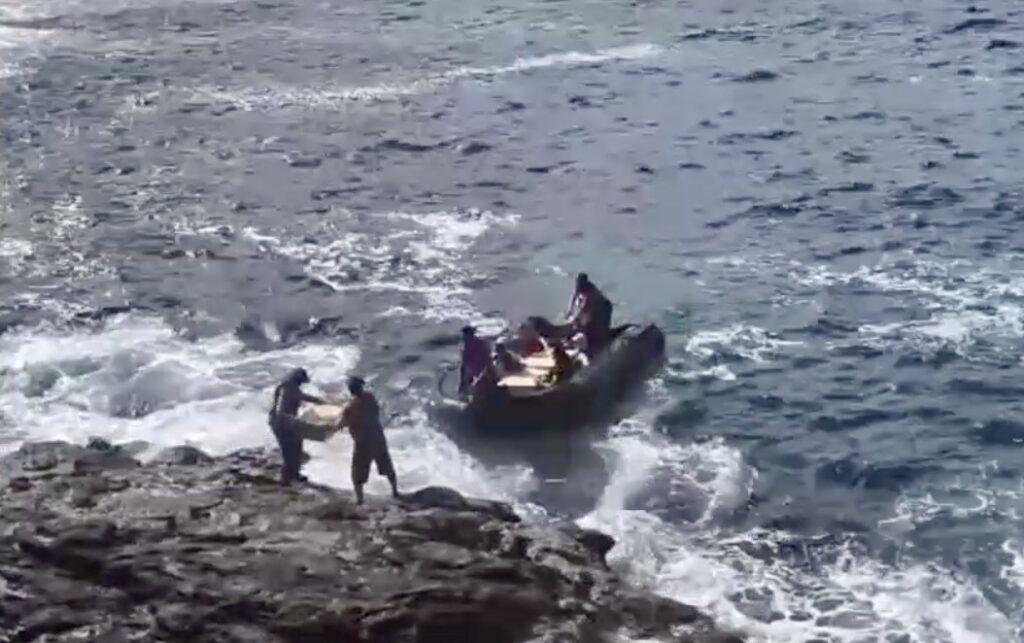
CREDIT: FROM PRESENTATION BY SHELDON PLENTOVICH, RACHEL ROUNDS, AND HOLLY FREIFELD.
“Obviously, there’s no way one person could walk a box down successfully,” Plentovich said.
Once the birds made it to the NOAA vessel, their boxes were stored in a custom-fitted cabin where their food was prepared.
Unlike, the ‘ekupuʻu that were translocated last year, which ate everything they were given, Plentovich said, the palihoa were very, very picky.
“All but one lost weight. It was surprising and also terrifying,” she said. Eventually, however, all the birds were eating after a few days.
Unfortunately, a bird with a high intestinal parasite load died in transit, even though it was eating, she said. “We were super bummed to lose a bird, but it did lead to some changes in our protocol that we will implement as we move forward,” she said.
Once they finally got to Kapou, she said the birds seemed to like it.
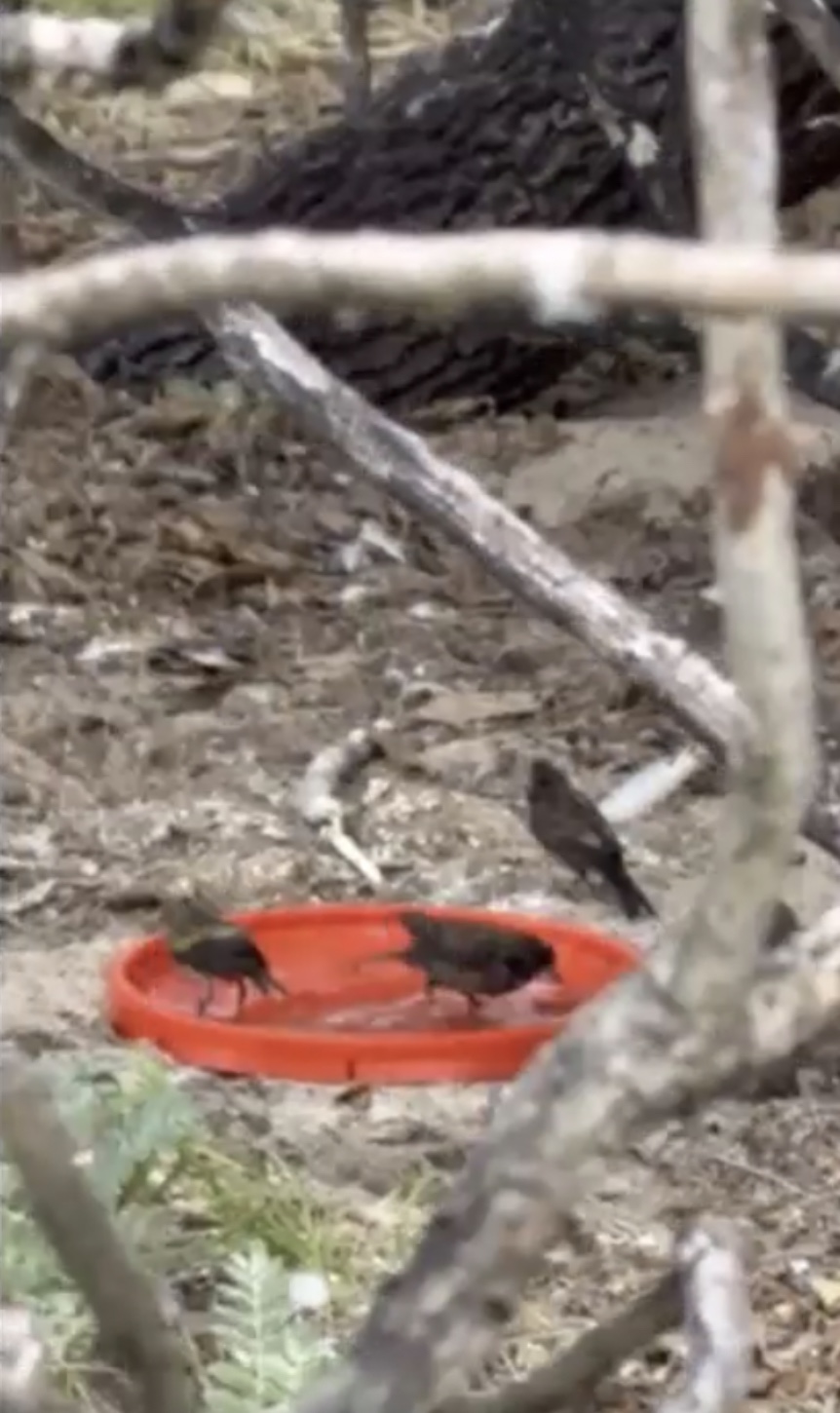
The team decided to forgo feeding stations at the release site, since the birds weren’t that interested in the food they’d been offered. It did, however provide water, using bucket lids that were refreshed a couple times a day. Those, Plentovich said, were a big hit.
While most of the birds stayed near the release site, “We did have birds traveling to the end of island come back and partake in the water party.”
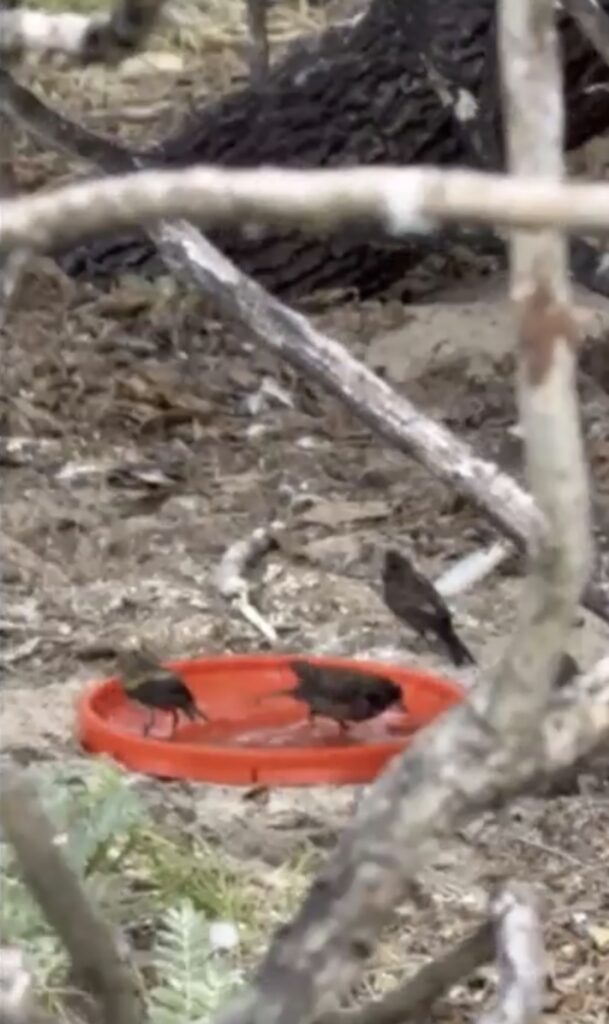
They were seen foraging normally and “looked really good. Hopefully, they were able to gain weight,” she said. On the fifth day after the birds’ release, a male was heard singing. Although the palihoa’s regular breeding season had ended, she said that the ‘ekupuʻu translocated last year had immediately begun breeding after being released and the team hoped the same would happen this time.
“Unfortunately, Hurricane Lala came,” she said. The team had to evacuate five days after the birds’ release, which was “a big bummer for all of us.”
She added that the hurricane highlights the dangers of having single-island populations of the birds, as well as how translocations can be used to mitigate the extinction risk. After end of sentence, insert the following: Up until this past summer, the entire palihoa population of about 3,000 individuals lived on Nihoa, which Hurricane Lowell hit on September 8, just three weeks after the translocation to Kapou.
As we see temperatures warm, there are going to be more and more storms in the northwestern Hawaiian islands, she said.
The good news, she continued, is that team members Olivia Hansen and Halee Pearce returned to Kapou last month and in just three days were able to spot 19 individual palihoa, which were all looking good, Plentovich said. They also heard a lot of singing. “Olivia saw debris carry … We’re pretty sure there is some nesting happening and I’ve tried to bribe them to find a nest before they leave,” she said.
Next Steps
In the near term, 50 ‘ekupuʻu are planned to be translocated from Kamole to Hōlanikū next year.
“We don’t want to lose any birds. I take it pretty seriously we lost single bird,” Plentovich said of the palihoa translocation. She said she and Work had since discussed whether or not to treat the birds to be translocated for parasites prior to being moved, but decided against it. Rather than stressing the birds and their systems more, they would look at additional indicators of bird health to determine which were fit to travel. In addition to looking for lesions or fat, future teams will also look at muscles and how robust they are, she said.
“Aviculture and bird care is not my specialty. … The team is the best we can get. I defer to whatever they say,” she said.
For the ‘ekupuʻu and palihoa to be down-listed from endangered to threatened, their FWS recovery plans call for them to have viable, self-sustaining populations on at least two islands that are safe from ocean inundation.
Without adequate sites in the NWHI, Plentovich said the ultimate goal is to reintroduce the birds to the Main Hawaiian Islands. While they currently only exist in the NWHI, subfossil records show that they once occurred throughout the Hawaiian islands.
Before that reintroduction can happen, however, predators and mosquitoes need to be brought under control, she said. The translocations last year, this year, and next year, are meant to buy the birds time for that to happen.
Research indicates that ‘ekupuʻu and palihoa are extremely vulnerable to avian malaria, which is spread by mosquitoes. She said some progress is being made to control mosquitoes in the MHI, but effective control is 15 or more years down the road.
“We’ve got make them survive until we can translocate them back to their ancestral homes,” Plentovich said.
Although daunting tasks lay ahead, U.S. FWS supervisory wildlife biologist Beth Flint said after the presentation that the fact that the translocation team was able to pull them off was “one of the joys of my life.”
Plentovich replied that Flint, always the voice of reason and a champion for the project, “gave our team the courage to keep going forward. This would not have happened without your support.”
Both Flint and Plentovich also gave credit to the translocation team, which was able to achieve something that Plentovich said was not universally supported.
“We were very lucky to have this particular group in place,” Flint said, with Plentovich adding,“That’s when it changed, when we got our new group.”
“It can be hard to be a wildlife biologist in Hawaiʻi. It’s really nice to share about successes and also get this positive feedback. I and our team and partners really appreciate it,” Plentovich said.
With that, Liat Portner, board chair of the Friends of the Hawaiian Islands National Wildlife Refuge, then reminded those watching Plentovich’s presentation via Zoom that the organization accepts donations that support some of the translocation costs, such as airfare and bird food. In addition to donating, she said, “You can get swag that has our cute little finch mascots.”
— Teresa Dawson
Leave a Reply