
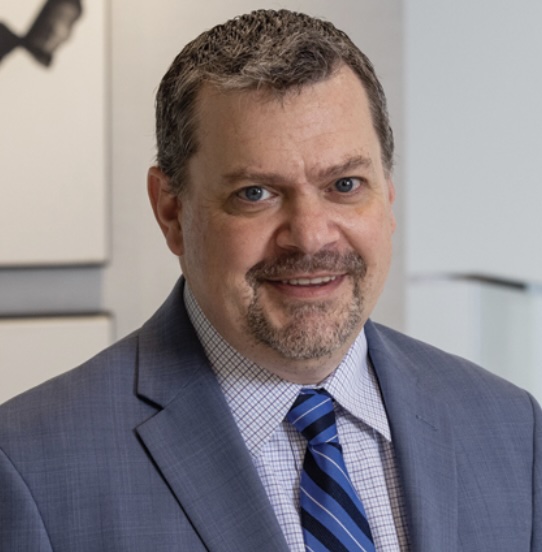
(Above photo: Kevin Minoli. Credit: Alston & Bird)
In November 2024, members of the board of the state Agribusiness Development Corporation were advised by Ben Berridge of Stantec GS, Inc., that complying with permit conditions of a draft National Pollutant Discharge Elimination permit for its runoff in West Kauaʻi would cost up to $100 million to implement with annual costs somewhere between $1 million and $2 million a year. What’s more, it would “signal the beginning of the end of agriculture in Hawaiʻi.”
Or, he said, the ADC could adopt a “more cost-effective” approach by attempting to gin up public opinion in support of its position, challenge permit terms, and pursue other avenues as well in support of “a more reasonable and effective regulatory strategy.”
The ADC executive director and board members found that argument persuasive. A few months later, a team of attorneys with the Department of Attorney General reviewed proposals from private law firms wanting to represent the ADC in litigating terms of the NPDES permit as a special deputy attorney general.
The team settled on Alston & Bird, a large firm with almost 1,000 attorneys nationally. Kevin Minoli would be the lead counsel in the NPDES matter. Minoli’s hourly rate was set in the contract at $1,535. Other attorneys would charge at $800 an hour. By comparison, attorney fees in Hawaiʻi average around $340 an hour, with a top rate usually not exceeding $540.
The contract set the ceiling for attorney fees at $135,000, with $10,000 available for expenses and $5,000 for insurance against errors and omissions. The expected duration of the contract was two years, carrying the ADC through the NPDES process until April 2027.
The AG selected the firm, but the ADC was responsible for the bills. This may have been one of the original sins in the scheme. Was the ADC even consulted before the Attorney General committed it to paying the lead attorney an hourly rate far higher than what a local firm would charge? Perhaps the ADC executive director and board members believed that by having Delanie Prescott-Tate, a deputy attorney general assigned to the agency, sit on the AG’s selection committee, the ADC’s financial interests would be protected.
Hah! Alston & Bird hit the ceiling and zoomed right on through it months before the Department of Health opened a contested case on the permit. As detailed billings show, other parties with an interest in the contested case, including the County of Kauaʻi and the Kekaha Agricultural Association, apparently felt that they, too, could call on Alston & Bird for advice in their efforts to contest terms of the draft permit.
Equally troubling is the fact that no one, either in the AG’s office or in the ADC, challenged the charges in the monthly billings.
While the hourly rate for Minoli remained at $1,535, the contractual fee for other lawyers was violated right from the start. Alston & Bird attorneys Meaghan Boyd and Ke Zhang worked hundreds of hours on the ADC’s NPDES issue, at hourly rates of $1,505 and $1,170, respectively, despite the $800 limit set in the contract. Invoices reviewed by Environment Hawaiʻi reveal that the discrepancies between the contractual rates for attorneys other than Minoli as well as paralegal rates ($500 an hour) amount to more than $166,000.
An even more fundamental question is this: With Alston & Bird having sped past the contract ceiling and ignored the contracted rates for associate attorneys, was the state legally obligated to pay for services beyond the original $150,000 ceiling – or, to be precise, the $135,000 actually stipulated for billable hours? By the end of June, total billings totaled $996,811.50. With ADC having paid off just $146,766 of that, the outstanding balance stood at $849,045.50
But no one at the ADC raised any question about the charges. And the window for challenging them slammed shut on June 26. On that date, Attorney General Anne Lopez signed a supplement to the original agreement, raising the ceiling to $1 million.
But the bail-out from the Department of Attorney General does not begin to solve the problems of the ADC.
The lump-sum payoff by the Attorney General of the remaining Alston & Bird charges leaves the ADC with just $3,188.50 unspent in its account with the AG. To put it another way, it can afford two hours and five minutes of Minoli’s time.
And so, while the ADC board seemed to breathe a sigh of relief at the close of its June special meeting, when this payoff plan was approved, if the ADC is to continue to use the services of Alston & Bird, it’s going to have to find a new source of funds.
Maybe it’s time to find a new attorney.
Better yet, it’s time to drop the disastrous, expensive challenge to the DOH permit and get on with cleaning up the discharges.